
A cheaper transaction is not necessarily a safer transaction. In decentralized finance, the most dangerous gas-saving decision is often the one that appears economically rational in the moment: lowering a fee too aggressively, approving a transaction too quickly, or using an unfamiliar interface because it advertises a better rate. Gas optimization is therefore more than reducing the amount paid to a network validator. It is the discipline of balancing execution cost, confirmation reliability, transaction complexity, and the risk of signing an action that does not do what the user expects.
Consider a US-based DeFi user preparing to swap tokens during a volatile market session. The user opens a browser wallet, sees a quoted network fee, and tries to reduce it manually. The transaction may save a small amount if it succeeds immediately. But if the fee is too low, the transaction can remain pending, fail after consuming gas, or become difficult to replace. During that delay, the exchange rate may move, a lending position may approach liquidation, or a malicious token approval may remain active. The central lesson is counterintuitive: the cheapest transaction can carry the highest total cost when execution risk is included.
What Gas Actually Pays For
On an Ethereum-compatible network, gas measures the computational work required to execute an operation. A simple transfer generally requires less computation than a decentralized exchange swap, a liquidity-position adjustment, or a transaction that interacts with several contracts. The final fee is shaped by both the amount of gas used and the price paid per unit of gas. These are related but distinct variables.
This distinction matters because users often treat every fee problem as a pricing problem. Sometimes the network is busy and the gas price is elevated. In other cases, the transaction itself is computationally complex. A user cannot always solve the second problem by offering a lower fee. If the transaction requires a certain amount of computation, reducing the fee does not make the computation smaller; it only changes how attractive the transaction is to validators and how quickly it may be included.
There is also a difference between a transaction that is pending and one that is invalid. A pending transaction may eventually be confirmed if network conditions change or if its fee is replaced with a more competitive one. A transaction that reverts has been executed but failed according to the contract’s rules, and the network may still charge for the computation already performed. Gas optimization must therefore include pre-execution review, not merely fee adjustment.
A Wallet Is a Risk-Interpretation Layer
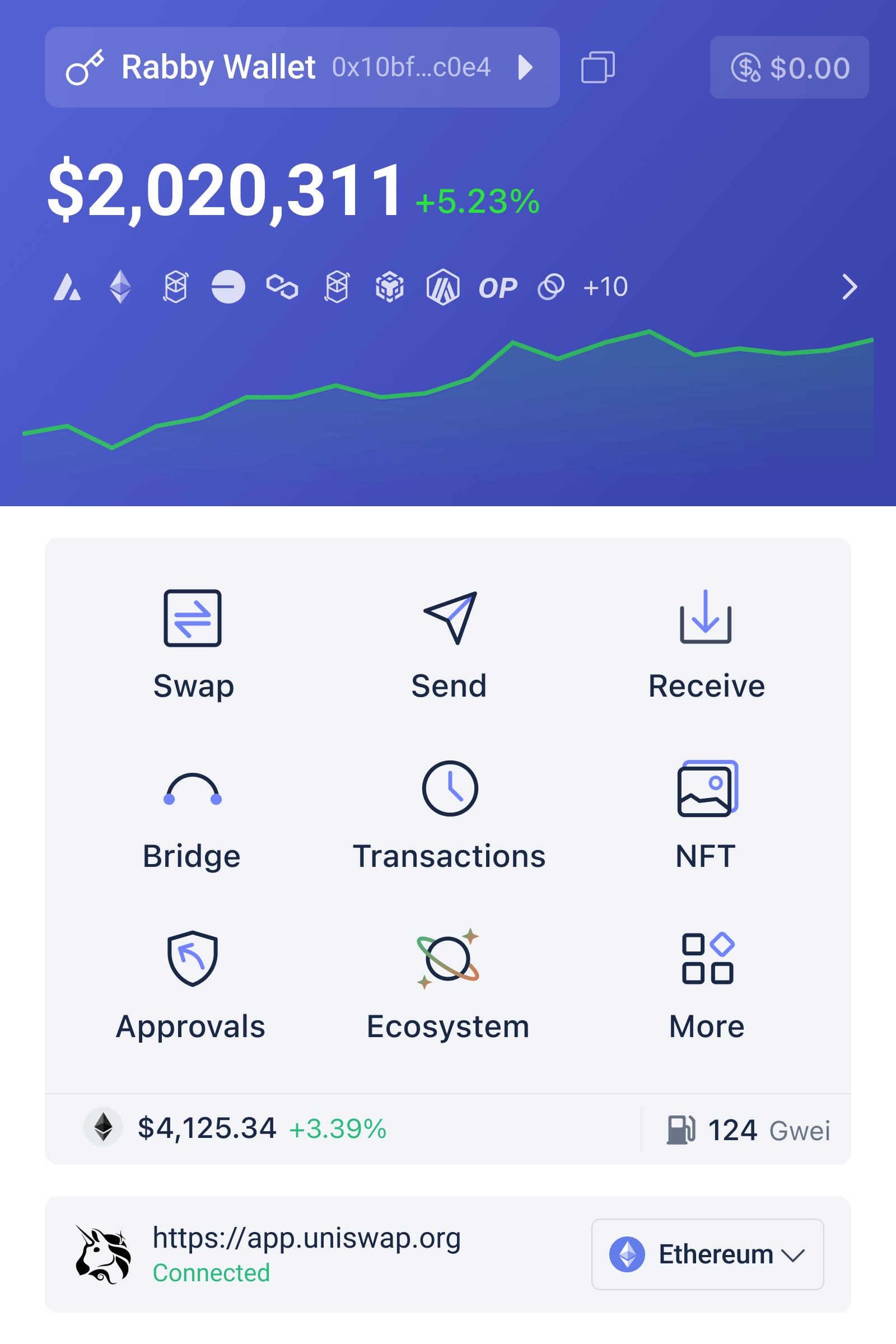
A browser wallet does not remove the need for judgment. Its security value depends on how clearly it translates a contract interaction into a decision the user can evaluate. This is particularly important in DeFi, where a single click may authorize a token transfer, create a borrowing position, exchange assets through a router, or grant a standing allowance to a contract.
When evaluating a wallet extension, users should obtain it through a trusted and carefully verified source rather than relying on advertisements, search-result lookalikes, or unsolicited messages. Those channels can lead to counterfeit extensions designed to capture recovery phrases or redirect transactions. Readers who are reviewing installation instructions may consult this rabby extension download resource, while independently checking the publisher, domain, permissions, and installation flow before importing or creating a wallet.
The important security principle is separation of functions. A wallet may display estimated gas, simulate a transaction, identify a contract interaction, or warn about a potentially dangerous approval. These features can improve situational awareness, but they are not guarantees. Simulation depends on the state of the blockchain and the assumptions of the software. A transaction can change between simulation and confirmation, particularly when market prices, liquidity, or contract state are moving quickly.
The Security Trade-Off Behind Gas Optimization
Gas optimization creates a three-way trade-off among cost, speed, and certainty. Increasing the fee may improve the chance of timely inclusion, but it does not make a malicious transaction legitimate. Reducing the fee may save money, but it can produce delays or replacement complexity. Waiting for a calmer period may reduce the network fee, yet waiting can be dangerous when a position is exposed to liquidation or a time-sensitive opportunity.
A useful mental model is to distinguish the visible fee from the transaction’s total expected cost. The total cost includes the network fee, the probability of failure, the value exposed during delay, the potential consequences of an incorrect approval, and the operational time required to recover from a stuck transaction. For a routine transfer, a modest delay may be acceptable. For a leveraged position, the same delay may be economically material.
Users should also be cautious about confusing a failed transaction with a stolen asset. A reverted transaction can consume gas without completing the intended action, while a successful but malicious approval may allow later asset movement. These are different failure modes and require different responses. The first is mainly an execution-cost problem; the second is a permissions and custody problem.
A Practical Review Process Before Signing
Before confirming a DeFi transaction, the user can apply a compact review framework. First, verify the network and the destination contract. A familiar token name is not sufficient because counterfeit assets can use similar symbols and branding. Second, identify the action: transfer, swap, approval, permit, deposit, withdrawal, or contract call. Third, check whether the amount and recipient match the intended operation.
Next, examine permissions rather than focusing only on the current amount. An approval may authorize a contract to spend a specified quantity or, depending on the design and user choice, a much larger balance. A lower immediate gas fee is not a good trade if the transaction creates an unnecessarily broad allowance. Where practical, limited approvals and periodic permission reviews reduce the blast radius of a compromised or deceptive application.
Finally, treat warnings as prompts for investigation, not obstacles to dismiss automatically. A warning can reflect a known interaction pattern, an unusual contract, a simulation mismatch, or incomplete information. It may be a false positive, but the correct response is to verify the transaction through an independent route, not simply to override the warning because the fee looks attractive.
Where Gas Optimization Breaks Down
No wallet can make every DeFi interaction legible. Complex transactions may involve routers, aggregators, bridges, token callbacks, and multiple contracts. The more layers involved, the harder it becomes for a user to map the human intention—“swap one asset for another”—to the exact permissions and calls being executed.
Estimates also have boundaries. Gas predictions can be affected by contract state, access patterns, network congestion, and whether another transaction changes relevant conditions first. A transaction that appears safe in a simulation may still face slippage, a changed balance, or a contract-side restriction at execution. This is why transaction simulation should be treated as evidence that improves a decision, not as an absolute security certification.
There is a further operational limit: users can optimize fees only if they understand nonce management and transaction replacement. Sending multiple replacement transactions without tracking which one is active can create confusion. A replacement generally needs a sufficiently higher fee to be accepted as an alternative, and the exact behavior varies by wallet and network. When the value at risk is substantial, deliberate intervention is preferable to repeated guessing.
What to Watch as DeFi Interfaces Mature
The most useful direction for wallet design is not simply a lower quoted fee. It is better explanation of consequences: what will be spent, which contracts will be called, what permissions will remain afterward, and how a failure can be unwound. If interfaces become more effective at presenting this information before signing, gas optimization may evolve from a manual technical task into a more structured risk decision.
That outcome remains conditional. Better warnings can reduce avoidable mistakes, but they cannot eliminate phishing, compromised websites, faulty smart contracts, bridge risk, or the possibility that a user approves an action without reading it. The strongest security posture still combines a verified installation source, a protected recovery phrase, cautious permissions, transaction review, and a willingness to pause when the action is unclear.
Frequently Asked Questions
Does lowering the gas fee make a DeFi transaction safer?
No. Lowering the fee may reduce the immediate cost, but it can increase the chance of delay, replacement difficulty, or missed execution. Safety depends primarily on the legitimacy of the contract interaction, the permissions granted, and the user’s ability to verify the transaction.
Can a wallet guarantee that a transaction is safe?
No wallet can provide an absolute guarantee. Wallet warnings and simulations can reveal suspicious permissions, unexpected contract behavior, or likely execution problems, but they rely on available information and may not capture every future state change or application-level risk.
What is the most important gas-saving habit for DeFi users?
The most durable habit is to avoid unnecessary transactions and review the full action before signing. Batch operations when the application supports them, choose suitable network conditions for non-urgent activity, and avoid trading security or execution certainty for a small apparent fee reduction.
Gas optimization is best understood as a form of operational risk management. The objective is not to pay the lowest possible fee in every situation. It is to make an informed trade among cost, timing, reversibility, and permission risk. Once that broader frame is adopted, a browser wallet becomes more than a transaction button: it becomes a checkpoint where the user can test whether the proposed action matches the intention before value leaves the account.