
Okay, so check this out—browser-extension wallets are everywhere. They’re handy. They also put your keys one click away from the web. Whoa! That convenience matters because a single bad site or extension can empty an account. My gut said that a lot of people treat browser wallets like regular browser tabs, but they’re fundamentally vaults. Hmm… that tension is what this guide is about: practical, realistic steps to pick and use a wallet safely.
First impressions matter. When I first dove into browser wallets years ago, I was thrilled by the UX: seamless dApp connections, easy network switching, swap features built right in. But something felt off about the permissions models—too many prompts that users click through. Initially I thought “more features = better,” but then realized that extra features often expand the attack surface. Actually, wait—let me rephrase that: fewer features focused on core security often lead to safer outcomes for most users.
Here’s the thing. You’re balancing user experience and security. On one hand, you want a wallet that makes interacting with DeFi quick and painless. On the other hand, you need protections against malicious approvals, phishing, and supply-chain risks. So how do you choose? I’ll walk through the key signals I look for, what to test, and practices to adopt.
Look for these signals when evaluating a wallet:
- Open-source codebase and audited components — not a magic word, but check repos and audit reports.
- Clear permission model — does it show which contract and what actions you’re approving?
- Transaction preview and gas controls — can you inspect the calldata or at least see what a contract call will do?
- Isolation of secrets — hardware-wallet support or strong key-encryption on-device.
- Active maintenance and community — recent releases, responsive issue handling.
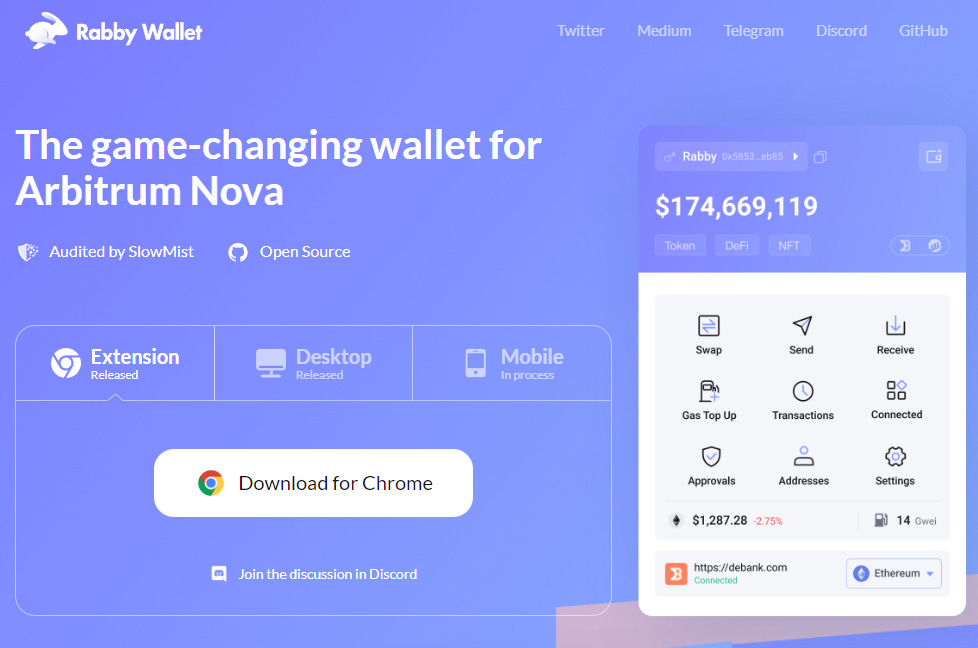
One concrete pick I keep recommending to friends is rabby wallet because it emphasizes clearer approval flows and integrates hardware-wallet support. I’m biased here—I prefer wallets that force you to think before you click—but the point is to choose a wallet that nudges caution, not one that streamlines blind clicks.
What to test before trusting a wallet
Run a small experiment. Seriously? Yes. Send a tiny amount to a contract and then try approving a benign action. See how the wallet shows that approval. Short test transactions reveal a lot about UX and potential hazards.
Check these behaviors:
- Does the wallet display the target contract address and method name?
- Can you revoke approvals from the UI (or at least find the allowance controls)?
- Does the wallet warn on suspicious sites or unexpected network changes?
- Is there a straightforward way to connect hardware wallets or to import as read-only (watch-only) accounts?
On one hand, fancy features like built-in swaps are convenient. On the other hand, they mean more dependencies and potentially more privileges. Though actually, some wallets do a decent job limiting permissions for in-wallet swaps by using aggregator contracts with limited allowances. So it’s not black-and-white.
Security practices that make a real difference:
- Use a hardware wallet for large balances. Period.
- Separate accounts: one for daily DeFi experiments, another cold account for holdings.
- Limit token approvals and periodically revoke unused allowances (tools exist for this).
- Pin and verify extension source—install only from official stores and from the developer’s site when possible.
- Keep your browser and OS patched; avoid unnecessary extensions that could read pages.
I’m not 100% sure of every workflow—there’s nuance depending on chains and tooling—but the separation principle is solid. A hot wallet should be treated like a daily driver: active and visible. A cold wallet should be inert, only waking for intentionally large actions.
Phishing remains the most common attack vector. Bad actors create dApp lookalikes, clone wallet UI, or trick users into signing malicious messages. The habit I formed early: always check the URL and the connected account address for any mismatch. (Oh, and by the way…) use transaction memos and small test calls if something smells off.
When an approval looks scary—what to do
If a dApp asks to “approve all” or gives permission to spend unlimited tokens, pause. Seriously—don’t just hit confirm because the button glows. My instinct says “red flag” for unlimited approvals. Instead, set allowance limits when possible, or use a proxy contract that restricts spend to a single operation.
Actually, there’s a tradeoff: repeating permission prompts adds friction which many users dislike. But friction can be safety. For most people, the extra 30 seconds to approve a bounded amount is worth it.
Another defensive move: use a transaction-signer pattern where you prepare unsigned transactions offline or with a hardware device. This adds complexity but drastically reduces risk for high-value moves.
FAQ
Can a browser extension wallet be as safe as a hardware wallet?
Short answer: no, not for high-value holdings. Browser wallets are convenient and okay for small, active positions. For larger sums, pair a hardware wallet with your extension or keep funds in cold storage. That layered approach reduces the chance of catastrophic loss.
How often should I revoke token approvals?
There’s no perfect cadence. Monthly checks are reasonable for active users. If you stop using a dApp, revoke its approvals immediately. Use dedicated tools to inspect and revoke allowances, and automate alerts where possible.
Are built-in swap features dangerous?
Not inherently. They add convenience. The risk is supply-chain: a vulnerable aggregator or a compromised rate provider can be problematic. Prefer wallets that show the exact contract flow and let you review the counterparties.