Reported by Andrew Zhang
Course Report: August 17 – August 28, 2026
AYLUS Lake Washington Branch successfully hosted ten sessions of the Game Development in Unity Camp from Aug.17 to Aug.28.
From Monday, August 17th to Friday, August 28th, our instructors Andrew Zhang and Vincent Zhang ran a ten-day tutoring course introducing students to game development in Unity. Sessions were held each weekday for 90 minutes and combined a lecture with a hands-on lab, gradually building toward a finished, playable game that students published and presented on the final day. Andrew also spent additional time on Q&A, homework correction and project help. A day-by-day summary of the course follows.
Day 1 — Monday, August 17th: Game Philosophy and C# Syntax
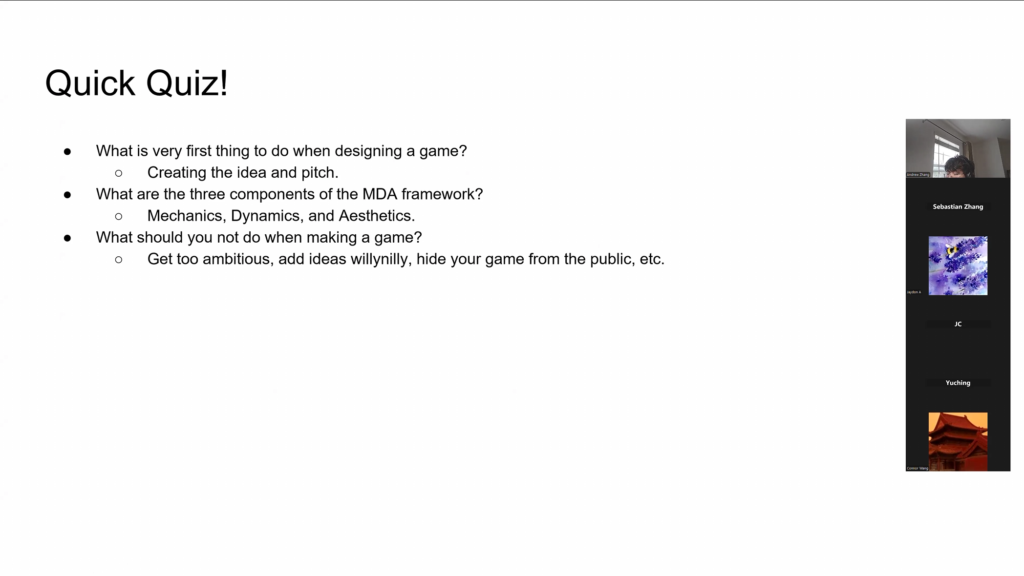
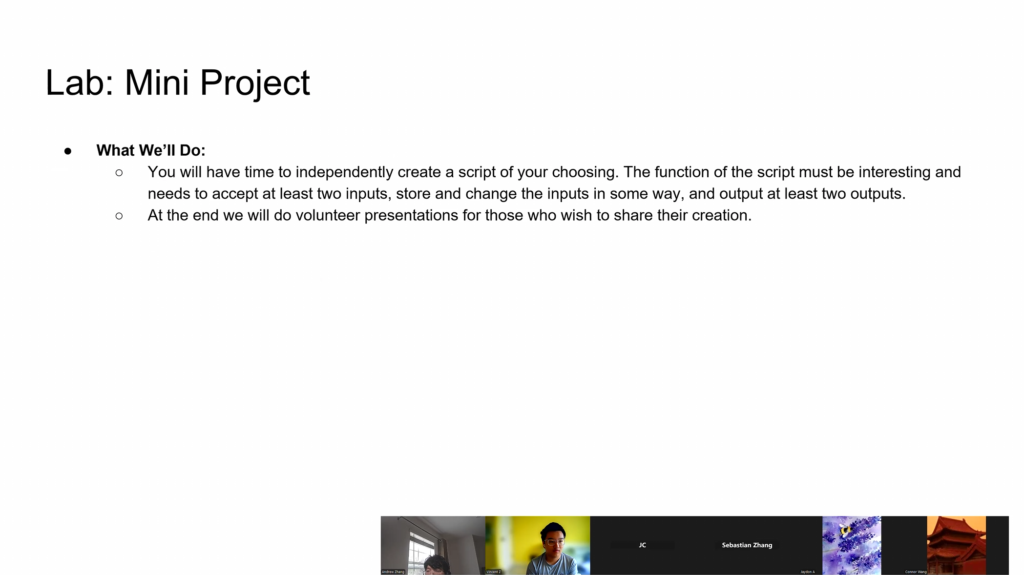
On August 17th, Andrew Zhang and Vincent Zhang formally introduced the course and laid out the goals and expectations for the course. The lecture for this day included core game design concepts, including the MDA Framework, systems of a game, and the development pipeline. Students then moved to learn the basic of C#, covering all the topics involving variables, data types, operators, etc. and checked their understanding with a short quiz. To close the session, students worked independently on a mini project, writing a short script that accepted and manipulated at least two inputs and produced at least two outputs.
Volunteer Hours:
Andrew Zhang: 2.5 hours
Vincent Zhang: 1.5 hours
Day 2 — Tuesday, August 18th: Physics and Movement
The second session began with a recap of game design fundamentals before first experiencing Unity’s editor engine. Students learnt about RigidBodies and their three types, how Colliders detect contact between objects, the use of Vectors and Quaternions, and why FixedUpdate() is used for physics so that gameplay feels consistent across computers of varying power. After a quick quiz to check comprehension, students began a guided lab, building their first movement script for their player character, including camera follow behavior
Volunteer Hours:
Andrew Zhang: 2.5 hours
Vincent Zhang: 1.5 hours
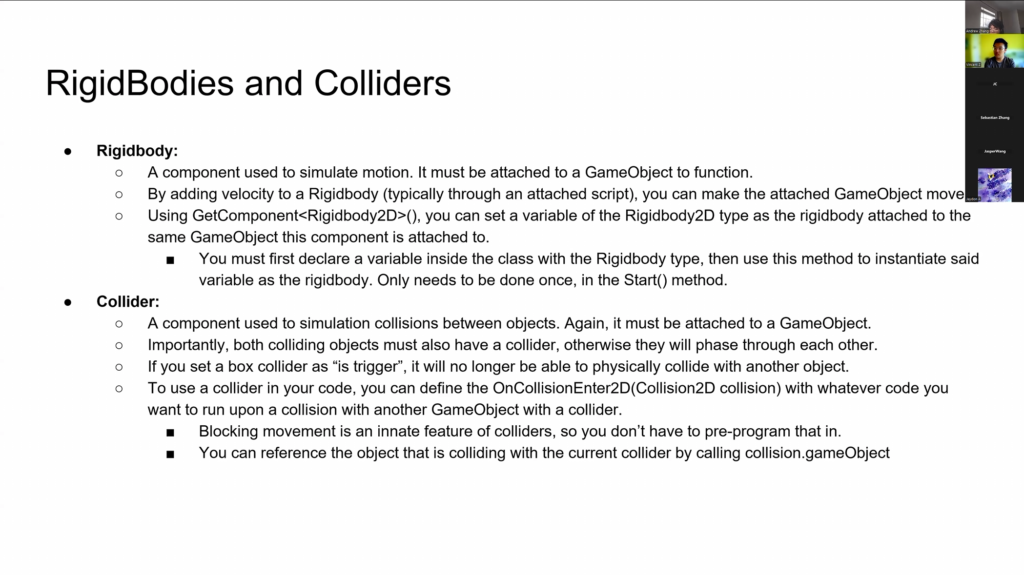
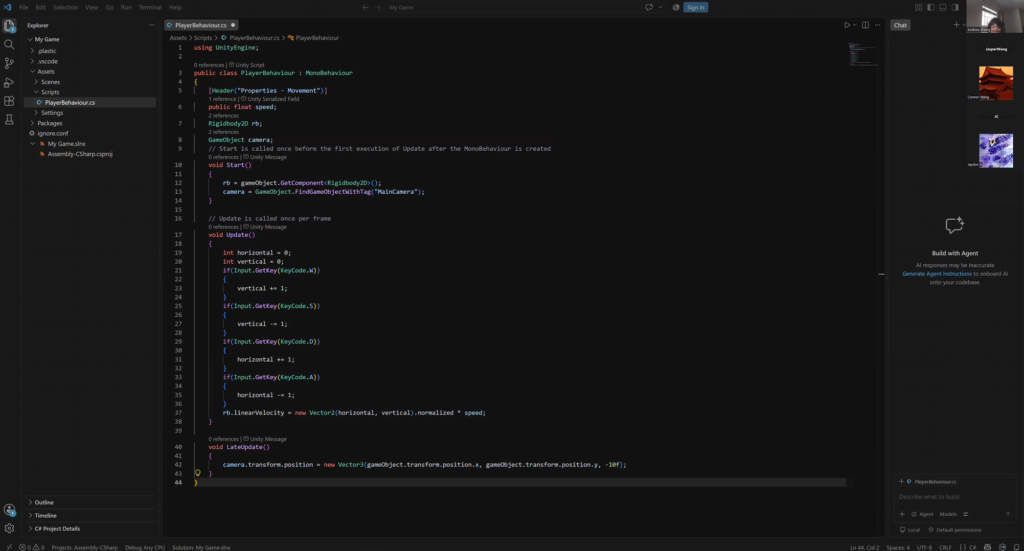
Day 3 — Wednesday, August 19th: Collisions, Layers, and Obstacles
On day three, the session opened with a recap of RigidBodies and Colliders before diving into how Unity calculates collisions and the distinction between a Collider and a Trigger. Students then learnt about Unity’s layering and tag system, including the proper use of layers to control object’s physics interactions. The session closed with a lab to finish the previous day’s movement script and add a shooting ability for the player, reinforcing the physics and collision concepts covered.
Volunteer Hours:
Andrew Zhang: 2.5 hours
Vincent Zhang: 1.5 hours
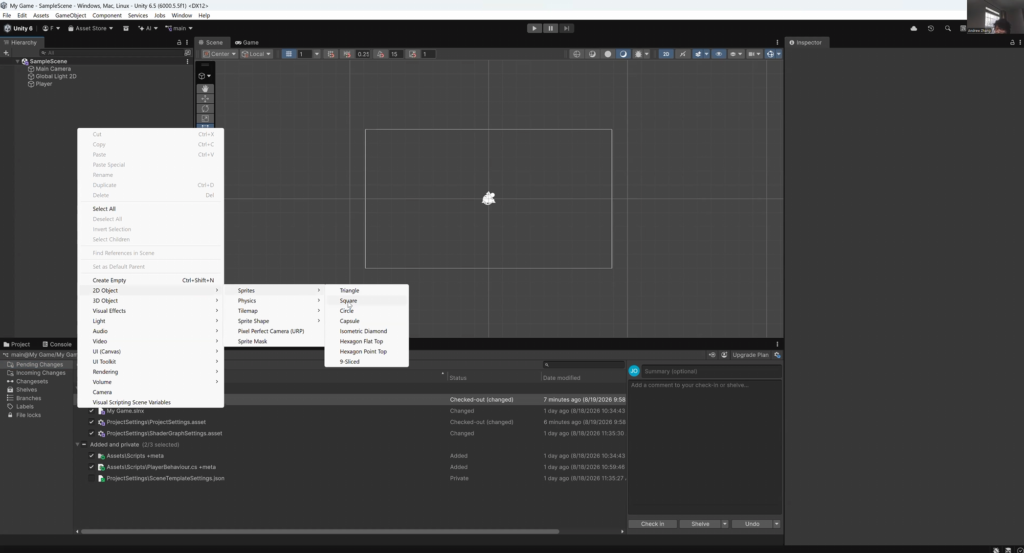
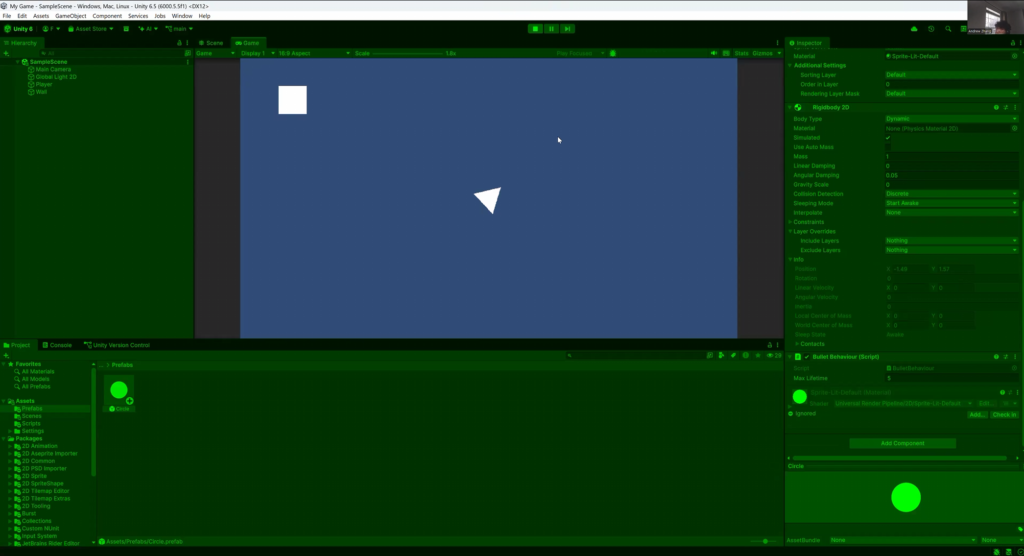
Day 4 — Thursday, August 20th: Raycasting and Enemies
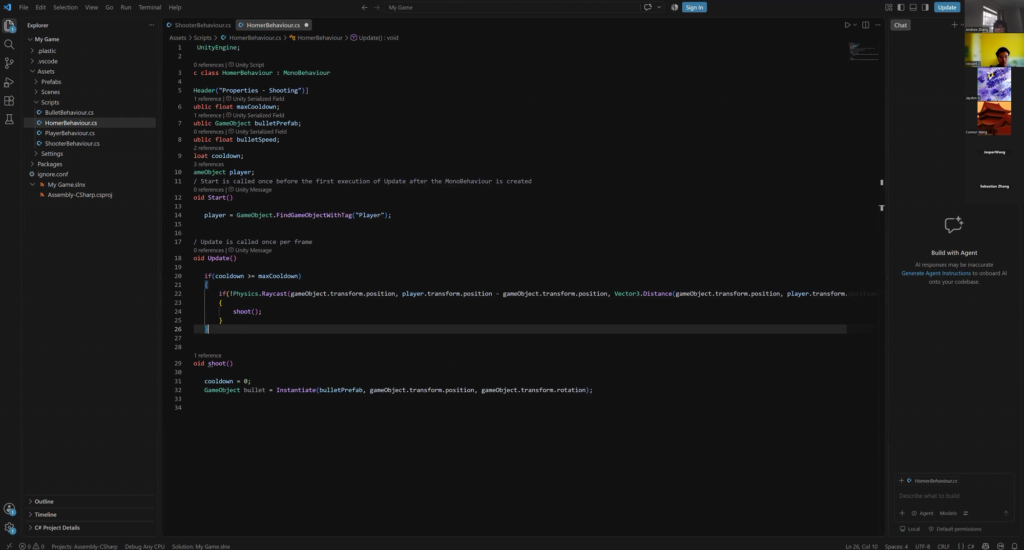
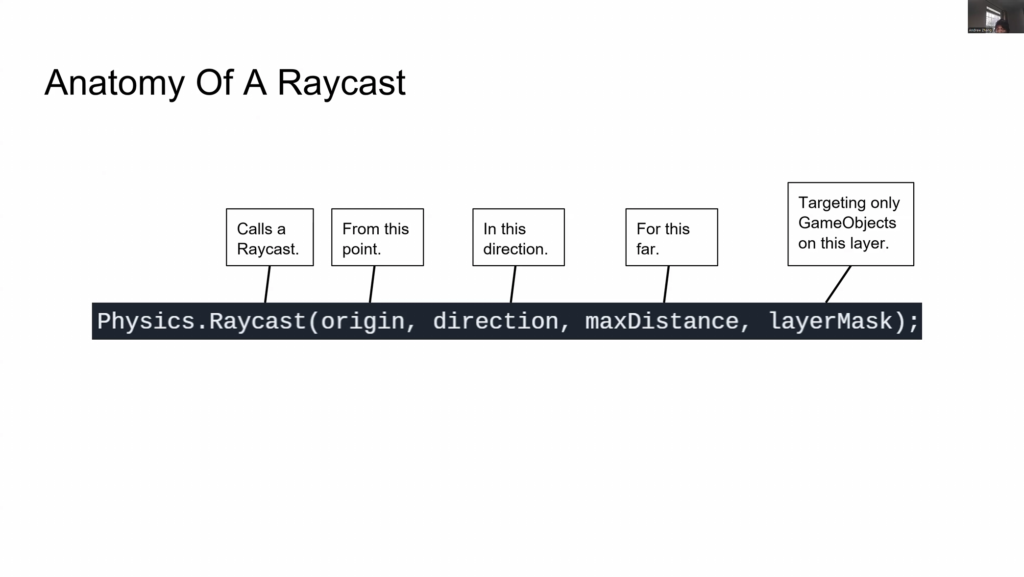
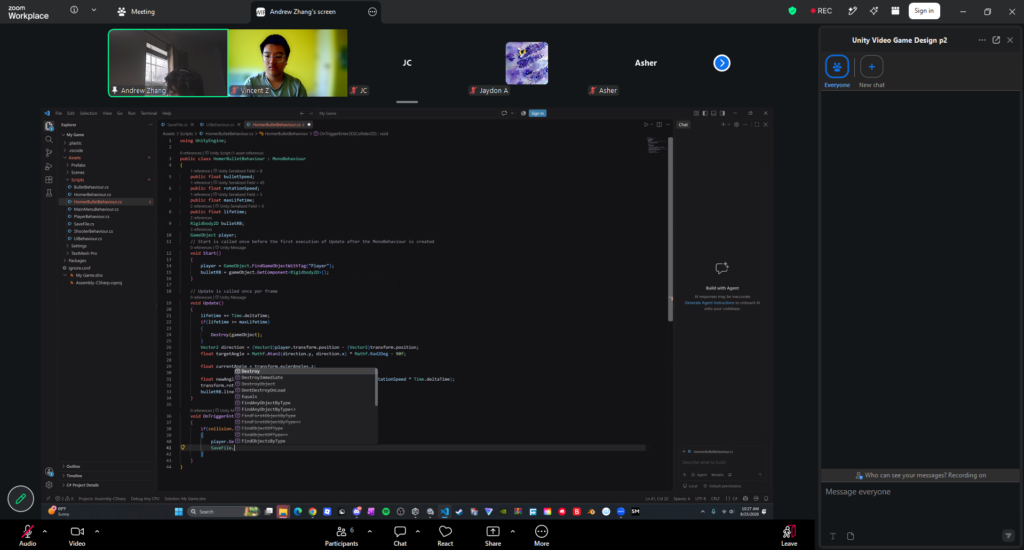
On day four, students learnt about the fundamentals of raycasting, including how a ray checks for the first collider it intersects. They also learnt about common mistakes to avoid, such as missing colliders, unnormalized directions, and forgetting to set a LayerMask, in order to optimize raycast performance. Buidling on this, the students worked through the lab to create a stationary enemy that detects and shoots at the player once in range using a raycast, along with an enemy that shoots a bullet that lightly homes towards the player.
Volunteer Hours:
Andrew Zhang: 2.5 hours
Vincent Zhang: 1.5 hours
Day 5 — Friday, August 21st: Scenes and Save Files
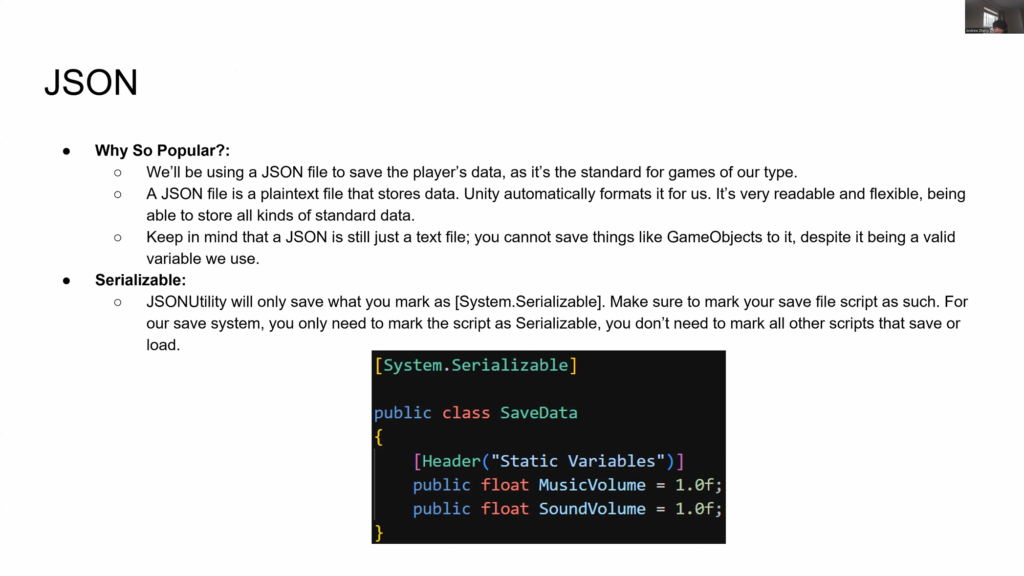
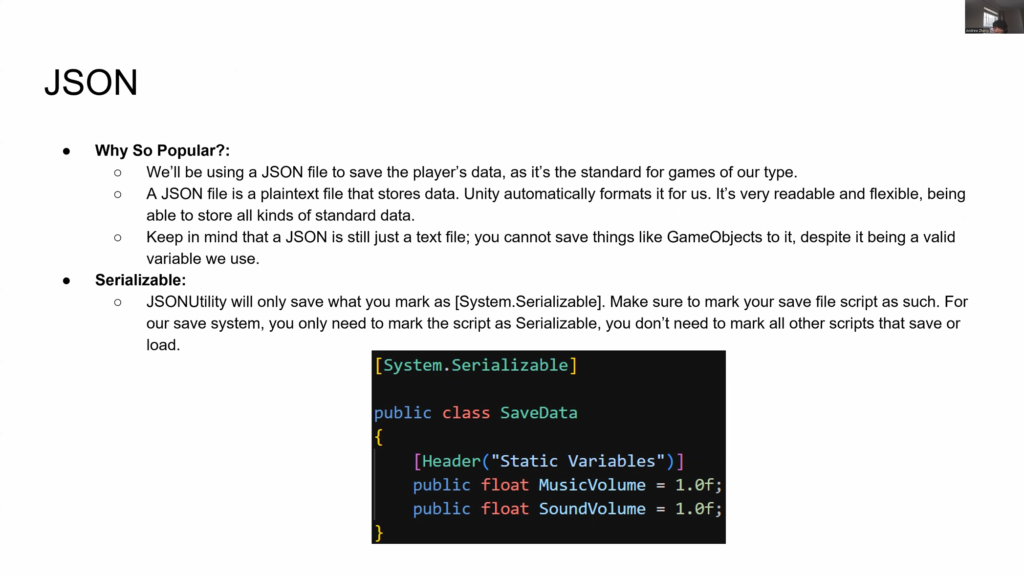
As the first week came to a close, day five’s lecture covered how Scenes organize a game’s GameObjects, how the scene list determines which scenes ship and which don’t, and how to save and load data using JSON files stored in Unity’s Application.persistentDataPath. Students then worked through a guided lab implementing a JSON-based
Volunteer Hours:
Andrew Zhang: 2.5 hours
Vincent Zhang: 1.5 hours
Day 6 — Monday, August 24th: Game States and UI
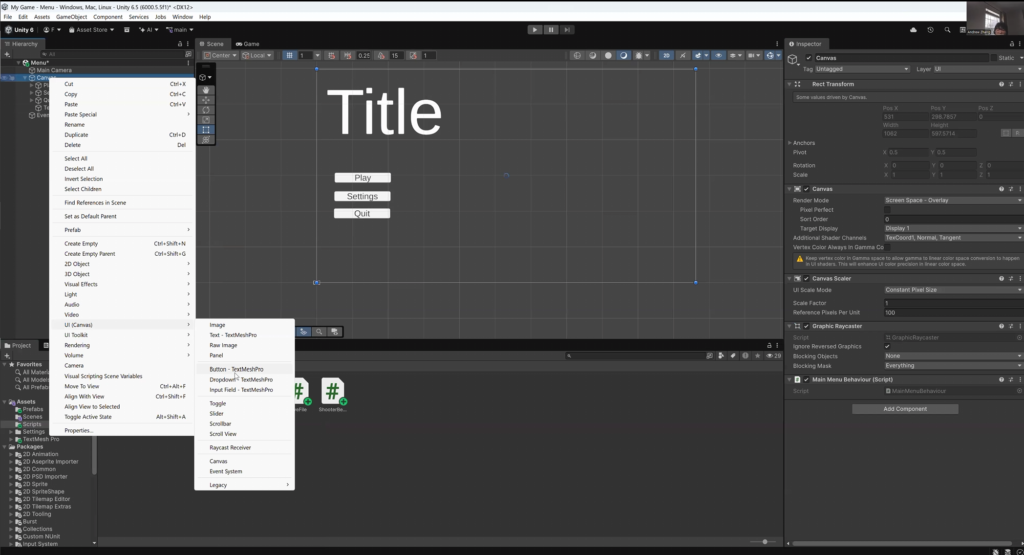
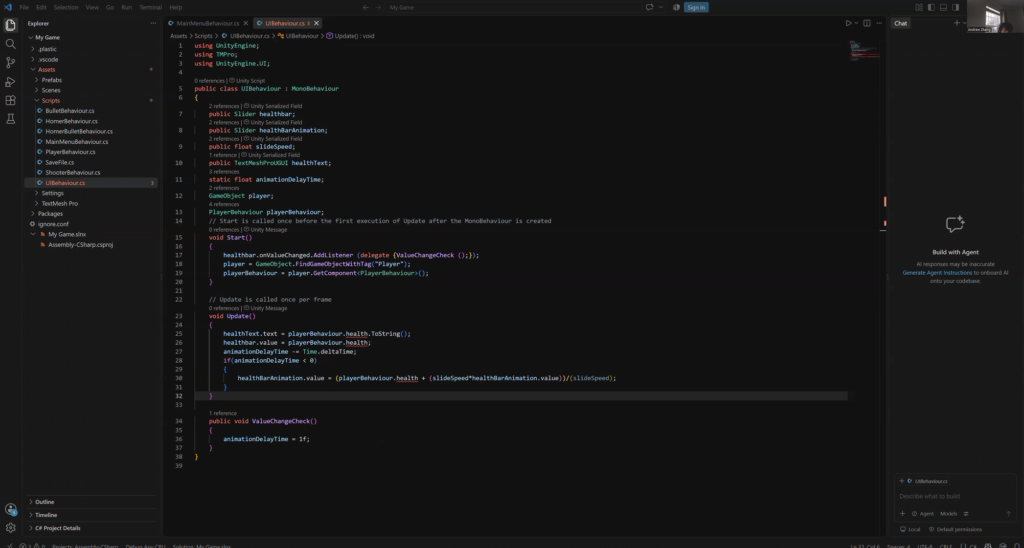
On the first day of the second week, the session began with a recap of scenes and saving before introducing game states, which track the state of their game, and Unity’s uGUI system, including the Canvas, anchors, RectTransform, and other properties. Students then worked on making their own uGUI, a health bar system and adding animation to make the inferface feel more polished.
Volunteer Hours:
Andrew Zhang: 2.5 hours
Vincent Zhang: 1.5 hours
Day 7 — Tuesday, August 25th: NavMeshes and AI
On day seven, students learnt about the limitations of manually scripting enemy movement and how to use the NavMesh and its sister components as a way to automatically calculate pathfinding around obstacles. In the lab that followed, students built an enemy that navigates toward the player using a NavMesh and applied the same pathfinding to enemies created earlier in the scene, giving their games more dynamic and responsive opponents.
Volunteer Hours:
Andrew Zhang: 2.5 hours
Vincent Zhang: 1.5 hours
Day 8 — Wednesday, August 26th: Audio, Art, and Particles
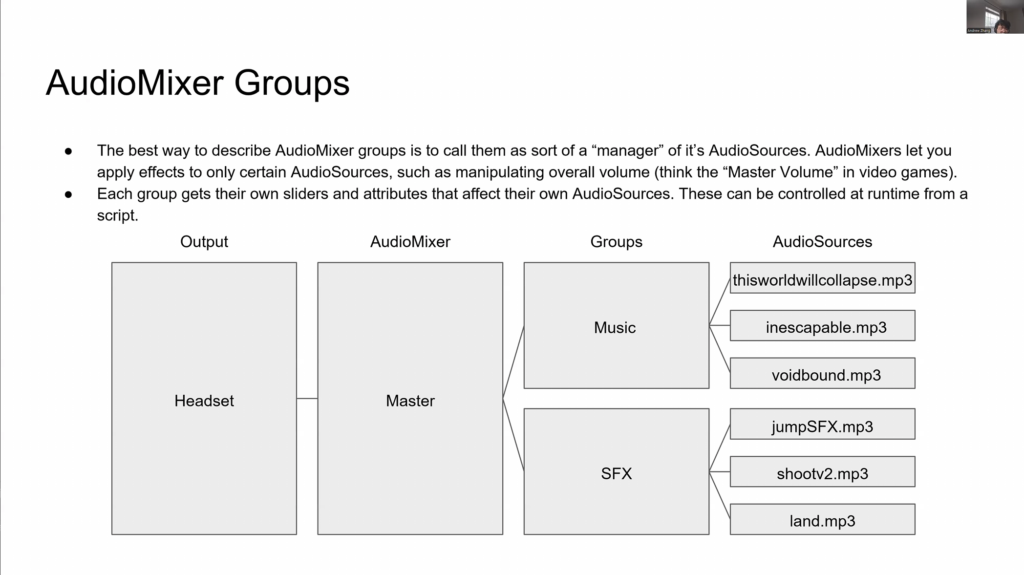
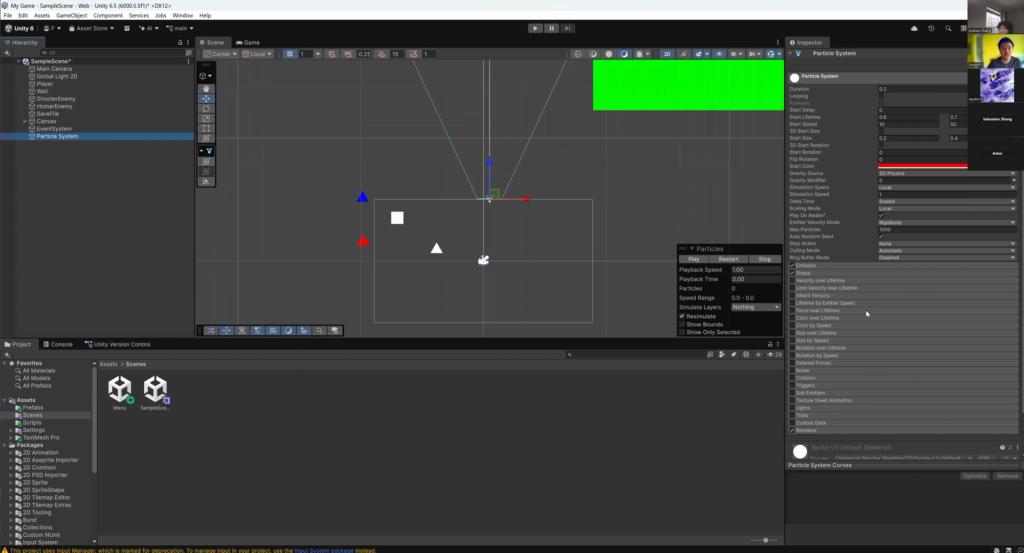
The eighth session focused on polish, covering AudioSources and AudioClips for sound, how to import audio and art assets into Unity, the basics of lighting and textures, and particle systems. Students spent the lab adding sound effects and particles for the player’s movement and landing, along with artwork for the player and obstacles. They also coded in particles for eliminating enemies.
Volunteer Hours:
Andrew Zhang: 2.5 hours
Vincent Zhang: 1.5 hours
Day 9 — Thursday, August 27th: Review Day
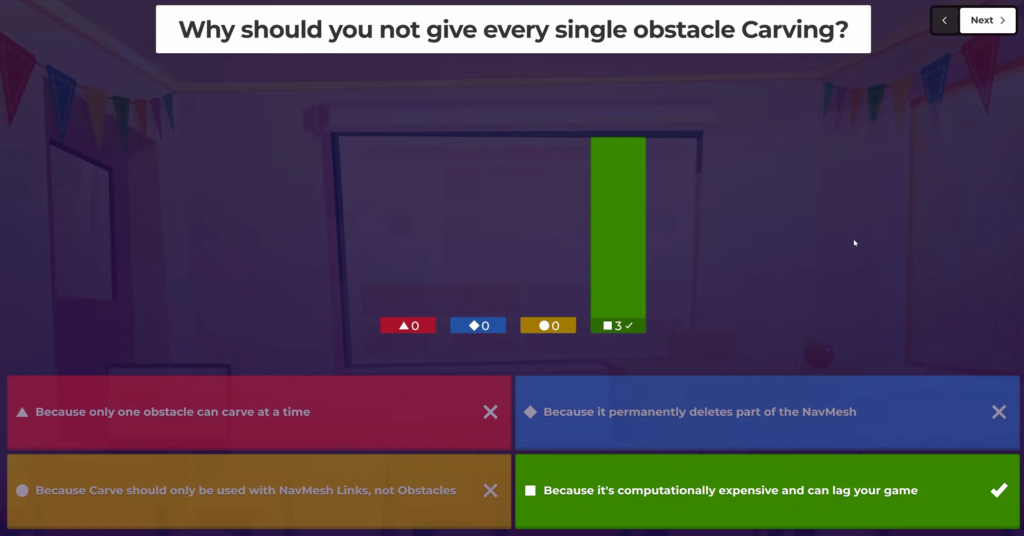
On August 27th, this session was set aside as a day to catch up and review. Students finished any remaining work from previous labs, and Andrew and Vincent hosted a Kahoot review game covering material from across the course. The rest of the session was used to fix any final compilation errors before tomorrow’s class.
Volunteer Hours:
Andrew Zhang: 2.5 hours
Vincent Zhang: 1.5 hours
Day 10 — Friday, August 28th: Exporting, Playtesting, and Presentations
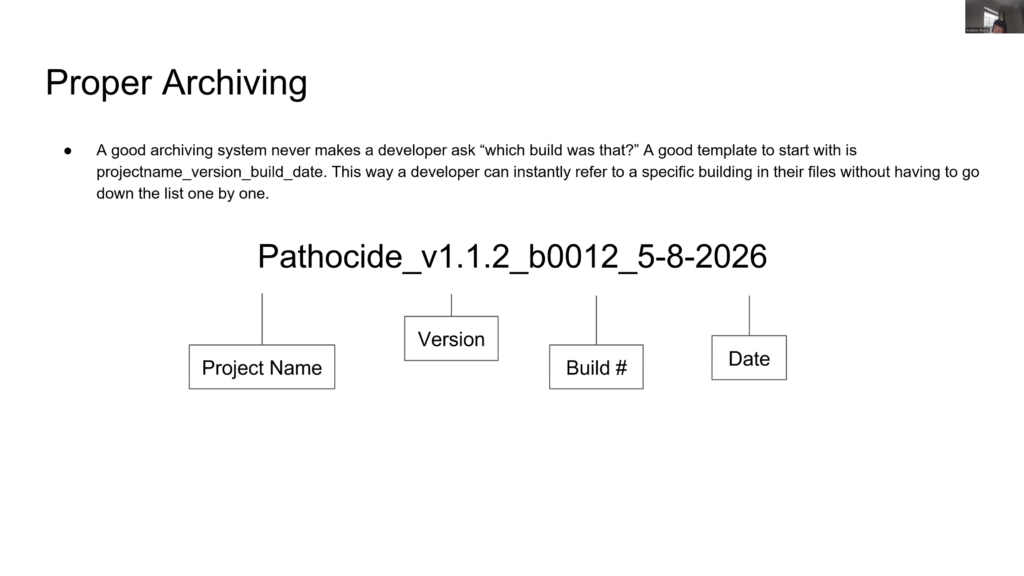
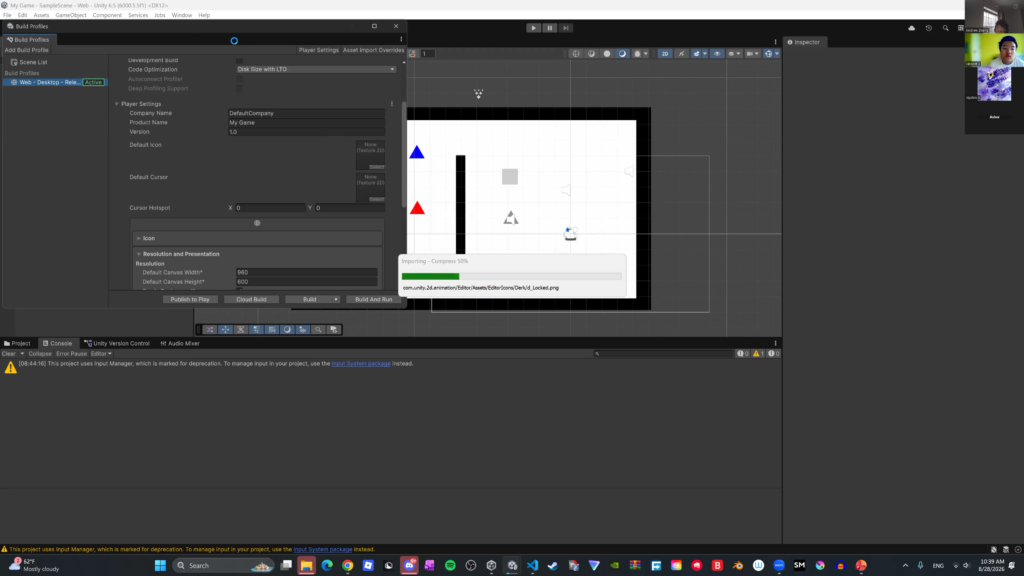
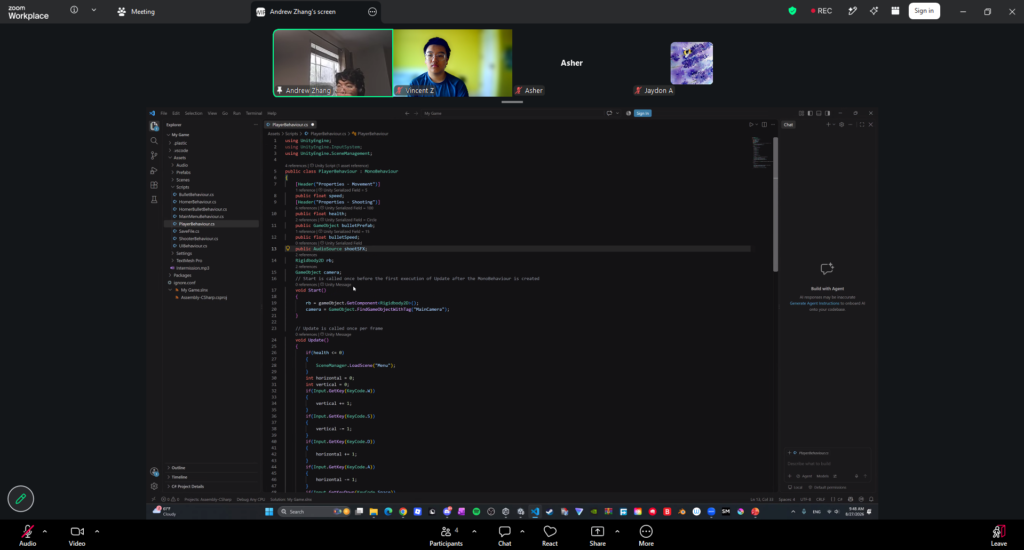
On the tenth and final day, the lecture covered the process of building and exporting a game, including build profiles, versioning conventions and practices, proper archiving, and several tips and tricks to do to check the release for any errors. Students then built and exported their game, wrapping up the ten-day course with each student having a complete, fully playable game to show for their efforts.
Volunteer Hours:
Andrew Zhang: 2.5 hours
Vincent Zhang: 1.5 hours